Goat Kids Hide: The Chihuahua Rule for Off-Grid Livestock
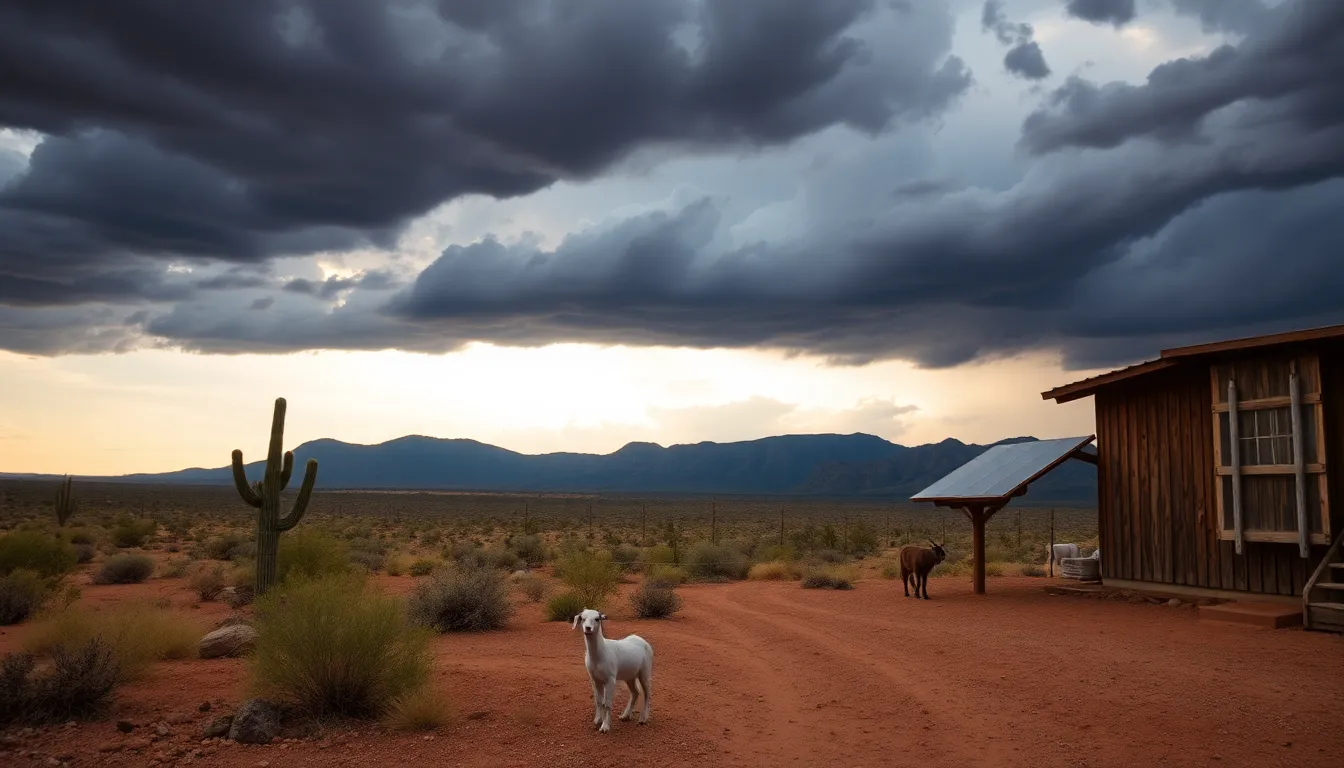
Newborn goat kids hide by instinct and vanish on cleared desert ground. A simple sizing rule for clearing that keeps them findable.
Breeding your own goats on an off-grid property in Cochise County makes economic sense. A healthy doe produces milk, meat, and offspring without the feed costs of buying animals from outside. But the first time you walk out to check on a newborn kid and find an empty pen, the panic sets in fast.
Where did it go?
This is the moment every new goat breeder faces. And the answer is simpler—and more instructive—than you might think.
Why Goat Kids Hide (And Why It's Survival Instinct)
Goat kids are born with a powerful survival mechanism: the instinct to hide. In the wild, a kid separated from the herd is vulnerable to predators. A motionless, hidden kid is harder to find than one that bleats and moves. This behavior isn't a sign of illness or rejection. It's hardwired.
When a doe gives birth, she typically isolates herself in a quiet corner of the shelter or pasture. The kid is born, cleaned by the mother, and within hours, the doe begins moving around to graze and drink. The kid, meanwhile, instinctively seeks a hiding spot—under brush, behind a shelter wall, in tall grass, or under a hay feeder. It will stay there, quiet and still, until the doe returns to nurse.
This hiding phase typically lasts 24 to 48 hours. During this time, the kid is not abandoned. The doe knows exactly where it is and returns on a regular schedule to nurse. But to you, standing in the pen with no visible kid, it looks like a disappearance.
Understanding this behavior is the first step to managing it without panic.
The Chihuahua Rule: Small Animals Hide Small
Here's the practical principle that seasoned goat breeders use: the Chihuahua rule. A newborn goat kid is roughly the size of a small dog—sometimes smaller. And just like a Chihuahua can squeeze into spaces you wouldn't expect, a goat kid can fit into gaps, under structures, and behind objects that seem impossibly cramped.
A kid born weighing 5 to 8 pounds can slip under a fence gap you thought was too small. It can wedge itself into the space between a shelter wall and a hay feeder. It can tuck itself under a piece of plywood leaning against a post. If your enclosure has any gap larger than a few inches, a newborn kid will find it and use it as a hiding spot.
This is where most new breeders run into trouble. They design their pens with adult goats in mind. A gap that stops a 100-pound doe is an open door for a 7-pound kid.
The Chihuahua rule means: design your kidding pen as if you're containing a small, determined escape artist. Seal gaps. Bury fencing. Check for holes. What looks secure for adults will not contain a newborn.
Setting Up a Kidding Pen That Actually Works
If you're planning to breed goats on your Cochise County property, your kidding pen is one of the most important infrastructure investments you'll make. Here's what works in desert and semi-arid conditions.
Size and shelter: A kidding pen should be at least 100 to 150 square feet—large enough for the doe to move away from the kid while still being able to supervise it, but small enough that finding the kid doesn't require a search party. The shelter should have solid walls on at least two sides, a roof or heavy shade cloth (essential in Arizona heat), and good drainage.
Flooring and substrate: Packed earth or sand works better than concrete in a desert climate. Concrete holds heat and is hard on young joints. A sand or earth floor also allows the doe to dig a shallow nest, which is natural behavior. Add straw or hay for bedding, but keep it managed—loose hay can become a hiding spot that's too effective.
Fencing and containment: Use 4-foot fencing for does, but here's the critical part: go down, not just up. Bury fencing at least 6 inches below ground or extend it outward at ground level. Kids will try to slip under before they try to jump over. Check every corner, every gate, and every post connection. A gap the size of your hand is a gap a kid can use.
Visibility: Design the pen so you can see into all corners from the entrance. Remove anything that creates a hiding spot you can't access—or remove it entirely during kidding season. A pile of old pallets, a dense brush pile, or a deep hay stack becomes a kid trap.
Water and feed access: The doe needs constant access to fresh water and hay. Place feeders and water buckets where the kid is unlikely to hide behind or under them. Elevated feeders work well here.
Monitoring Without Stress: The First 48 Hours
Once a kid is born, your job is to monitor without interfering. This is harder than it sounds, especially the first time.
Check on the doe every 4 to 6 hours during the first 24 hours. Look for signs that nursing is happening: a full udder being drained, the kid's belly appearing full and round, the doe's relaxed behavior. You don't need to see the kid constantly. You need to confirm the doe is nursing and the kid is healthy.
Signs of a healthy nursing kid: - The doe returns to the hiding spot on schedule (every 1 to 3 hours). - The kid's belly is round and full after nursing. - The kid is alert and responsive when you find it. - No discharge or obvious injury.
Signs of a problem: - The doe is not returning to the hiding spot. - The kid's belly remains sunken or flat. - The kid is cold, lethargic, or not responsive. - Signs of infection or injury.
If you see problem signs, intervene. Bottle-feed if necessary. But in most cases, a hiding kid is a healthy kid doing what millions of years of evolution taught it to do.
Common Hiding Spots in Desert Homestead Pens
If you're setting up on Cochise County property, you'll have specific challenges. The landscape here includes mesquite, creosote, rocky outcrops, and intense sun. Goat kids will exploit all of it.
Under and behind structures: Kids hide under hay feeders, behind water troughs, under shelter eaves, and in the gap between the shelter wall and the ground. Seal these spaces or remove the structure during kidding season.
In brush and vegetation: If your pen includes any natural vegetation—mesquite saplings, creosote, cholla, or even dense weeds—kids will hide in it. Clear the pen of vegetation before kidding season, or accept that you'll spend time searching brush piles.
Under shade cloth and lean-tos: Shade structures are essential in Arizona heat, but they create hiding spots. Use solid roofing where possible, or design shade cloth so there's no gap for a kid to slip under.
Rocky terrain: If your property has natural rock outcrops or a rocky pen floor, kids will hide between and under rocks. This is one of the hardest situations to manage. Either clear the rocks or accept that finding the kid will take effort.
When to Worry and When to Trust the Process
New breeders often mistake normal behavior for crisis. Here's the reality: a hidden kid is almost always a safe kid. Predators can't find what they can't see. The doe knows where it is. The kid is doing exactly what it should be doing.
Worry only if: - The doe shows signs of illness or distress. - The kid doesn't nurse (confirmed by checking the doe's udder and the kid's belly). - More than 48 hours pass with no sign of nursing. - You find the kid injured or cold.
Otherwise, let the process work. Check regularly. Confirm nursing is happening. And accept that for the first few days of a kid's life, you won't see it as often as you'd like.
Building a Sustainable Goat Program in Cochise County
Breeding goats on your off-grid property is one of the most cost-effective ways to produce milk, meat, and land management in a single animal. But it requires infrastructure, planning, and realistic expectations. A properly designed kidding pen, an understanding of normal kid behavior, and a willingness to let nature do its job are the foundations of success.
The Chihuahua rule—design for small, determined animals—applies to more than just kidding pens. It applies to your entire property infrastructure. Off-grid homesteads in Cochise County need systems that account for the landscape, the heat, the wildlife, and the unpredictability of desert living.
Sulfur Springs Land Management helps property owners in Cochise County build sustainable systems for livestock, water, land clearing, and off-grid living. Whether you're setting up your first kidding pen or planning a full-scale homestead, our team understands the specific challenges of rural property development in this region. Contact Sulfur Springs Land Management to assess your property and develop a plan for successful goat breeding and land management.
Gear for this job
Affiliate links — we may earn a commission from purchases at no extra cost to you. We only list gear we would actually put on a job.
- Crackshot Guardz Snake Bite Leg Gaiters — Most bites land below the knee, and brush work is exactly where they happen.
- Ironclad Ranchworx Leather Gloves — Catclaw and mesquite thorns go straight through fabric gloves.
Ready to Develop Your Land?
Sulfur Springs Land Management specializes in land clearing, grading, solar system consultation, and comprehensive off-grid property development. Let's turn your land into your dream off-grid property.
Contact SSLM TodayMore from the Blog
Getting Power to Rural Land: The Estimate Is Not a Price
SSVEC can bill for unanticipated costs up to six months after the work, and obtaining the easements is your job. What a line extension involves.
Rural LivingSplitting a Parcel: The County Will Record a Bad Split
A minor land division permit does not split your land — the deed does. And a split with no legal access can still be recorded if the deeds say so.
Rural LivingRunning a Business From Rural Land: The 25% Rule
Cochise County caps a home occupation at 25% of the residence floor area — even in a detached shop — and prohibits outdoor storage entirely.
Rural LivingSecond Dwellings: What Cochise County Allows on One Parcel
An ADU needs planning approval before any building permit, the owner must live on site, and an RV never qualifies. Park models do, with conditions.
Rural LivingWhat You Can Build Without a Permit in Cochise County
A 200 sq ft shed is exempt until you run power to it. The county's exemption list, the $1,000 threshold, and the fence rule that catches people.
Rural LivingFloodplain Rules Reach Further Than the Flood Map
A floodplain use permit covers grading and fencing, not just building — and watercourse setbacks of 50 to 300 feet apply to every structure.
Rural LivingThe Owner-Builder Option That Costs You the Certificate
Cochise County's no-inspection owner-builder path is cheaper and never gets a Certificate of Occupancy. What that means for lenders, insurers and buyers.
Rural LivingYou Cannot Camp on Your Own Vacant Land in Cochise County
The county's answer is a flat no — camping needs an established use on the parcel. What a temporary use permit actually allows while you build.
Rural LivingOpen Range: In Arizona You Fence Cattle Out, Not In
Arizona law bars recovery for livestock trespass unless your land sits inside a statutory lawful fence — and the statute specifies the wire spacing.
Rural LivingRural Internet: The FCC Map Shows Claims, Not Service
The national broadband map reports what providers say they offer at your parcel. How to check it, and the two challenges you can file when it is wrong.
Rural LivingDefensible Space in Cochise County Starts at the Driveway
Arizona's home ignition zones run 0-5, 5-30 and 30-100 feet. But an engine needs 12 feet of width and 15 of clearance to reach you in the first place.
Rural LivingA Composting Toilet Does Not Get You Out of a Septic System
Arizona excludes the kitchen sink from gray water, so a composting toilet still needs septic. The Type 4 permit, percolation testing and the reserve area.
Rural LivingOwning Arizona Land You Cannot Legally Reach
A dirt track to your parcel is not legal access. What Arizona's private way of necessity actually is, where easements are recorded, and what to check first.
IndustrySulfur Springs Valley: Two Water Districts, Not One
The valley is not one groundwater basin but two — Willcox in the north, Douglas in the south — with different rules. What every landowner should know.
IndustryHauled Water vs Drilling a Well: The Real Numbers
What a well really costs at 200-350 ft static water level in Sulfur Springs Valley, what hauled water costs per year, and where the break-even sits.
Rural LivingOff-Grid Solar in Winter: Sizing for Cochise County's Worst Days
Cochise County winter drops you to 4-5 peak sun hours. How to size batteries, autonomy days, inverters and charge controllers for the worst week.
Rural LivingB-Grade vs A-Grade Solar Panels: Is the Discount Worth It?
What the A/B grade distinction actually describes, why B-grade panels cost less, and when the cosmetic-versus-electrical trade-off is worth taking.
Land PreparationOff-Grid Site Prep Checklist: Pad, Access, Drainage, Utilities
A phased checklist for turning raw Cochise County land into a buildable site: survey, building pad, access road, drainage, utilities and septic.
Off-Grid LivingOff-Grid Solar in Arizona: How Many Panels Do You Need?
How many panels an off-grid Arizona property actually needs, what a full system costs in 2026, and the three tiers most Cochise County builds fall into.
Land ClearingLand Clearing in Cochise County: What to Know Before You Start
What land clearing costs in Cochise County, what you may and may not remove under Arizona rules, and which equipment suits mesquite and creosote.
Off-Grid LivingComplete Guide to Off-Grid Water Systems in Rural Arizona
Wells, hauled water, storage and pressure systems for a rural Cochise County property — how the pieces fit and what each one demands of you.